 Allervibe

Sesame allergy: symptoms, foods to avoid and hidden sources
Sesame is now a regulated allergen on both sides of the Atlantic and one of the fastest-growing food allergies in Europe. Symptoms, foods to avoid, cross-reactions with nuts, sesame oil, and how Allervibe finds it on a label.
● Allergen Details
| What is sesame?
Sesame seeds and sesame oil come from the sesame plant and are used widely in Middle Eastern, Asian, and Mediterranean cuisine. Sesame is now classified as a major allergen in the EU, the UK, and the US.
| Where is sesame found?
Sesame is obvious in tahini, hummus, sesame buns, halva, and sesame oil, but also in baked goods, crackers, granola bars, sushi, falafel, and many spice blends.
| Common symptoms of sesame allergy
Reactions can be severe: hives, swelling, vomiting, breathing difficulty, and anaphylaxis. Sesame allergy is often lifelong.
Sesame allergy symptoms
Sesame allergy is an IgE-mediated, immediate-type allergy. Symptoms begin within minutes and almost always within two hours:
- Itching or tingling of the mouth, lips and throat
- Hives, flushing, swelling of the lips, eyelids or face; eczema flares in children
- Stomach cramps, nausea, vomiting, diarrhoea
- Sneezing, runny nose, cough, wheeze, chest tightness
- Anaphylaxis: breathing difficulty, a drop in blood pressure, dizziness or collapse — call emergency services
Sesame sits with peanut and tree nuts in the group of foods that disproportionately cause severe reactions, and tiny amounts — seeds shed from a bun onto the bread next to it — can be enough. Anyone who has had a serious reaction should carry an adrenaline auto-injector. Sesame oil in cosmetics (listed as Sesamum indicum seed oil) can also cause contact hives or eczema.
Is sesame a nut allergy?
No. Sesame is a seed, botanically unrelated to peanuts (legumes) and tree nuts, and it is regulated as its own allergen. But the two often travel together: a large share of people with sesame allergy are also allergic to peanut or tree nuts, because the seed-storage proteins in sesame (Ses i 1, Ses i 2) resemble those in hazelnut, walnut, almond and cashew. Blood tests frequently show cross-sensitisation to poppy seed, sunflower and pumpkin seeds as well. A positive test does not automatically mean you will react to those foods — most sesame-allergic people eat nuts safely — so let an allergist sort out which results matter rather than dropping whole food groups.
Sesame allergy foods to avoid
The obvious ones are sesame seeds, tahini, hummus and halva. The list of hidden sources is longer:
- Burger buns, bagels, multigrain and seeded breads, crispbreads, breadsticks, crackers, pretzels
- Hummus, baba ghanoush, falafel, flatbreads, dukkah, za'atar and other Middle Eastern spice mixes
- Sushi, poke bowls, stir-fries, spring rolls, teriyaki and sesame sauces, gomasio, furikake
- Salad dressings and marinades made with sesame oil, breaded coatings
- Cereal bars, granola, energy balls, sesame snaps, halva ice cream
- Vegan spreads and protein bars, "Mediterranean" and "oriental" seasoning blends
- Cosmetics and medicines: sesame oil in creams, massage oils, soaps and some drug formulations
On labels sesame may appear as tahini, tahina, sesamol, gingelly or til oil (Indian), benne or benne seed (US South), simsim (Arabic and Swahili) or Sesamum indicum. Cold-pressed and toasted sesame oil — which is most sesame oil in Asian cooking — contains protein and is not safe. Highly refined sesame oil carries less, but the refining is rarely stated, so treat all sesame oil as off limits unless your allergist says otherwise.
How sesame is labelled
In the EU and UK, sesame seeds have been one of the 14 mandatory allergens since 2014: they must be named and highlighted in the ingredients list, even as part of a compound ingredient, and restaurants and bakeries must be able to tell you whether a dish contains sesame. The United States only added sesame as its ninth major allergen in 2023 under the FASTER Act — before that it could hide inside "natural flavours" or "spices", and older imported stock may still be labelled that way. Some US bakeries responded by adding sesame to everything rather than cleaning their lines, so "contains sesame" has become more common, not less.
Abroad, look for Sesam (German), sésame (French), sésamo (Spanish), sesamo (Italian), sesam (Dutch), sezam (Polish, Croatian) and sésamo or gergelim (Portuguese). Allervibe recognises all of them, plus tahini, gomasio and the other derivatives.
| How Allervibe helps you avoid sesame
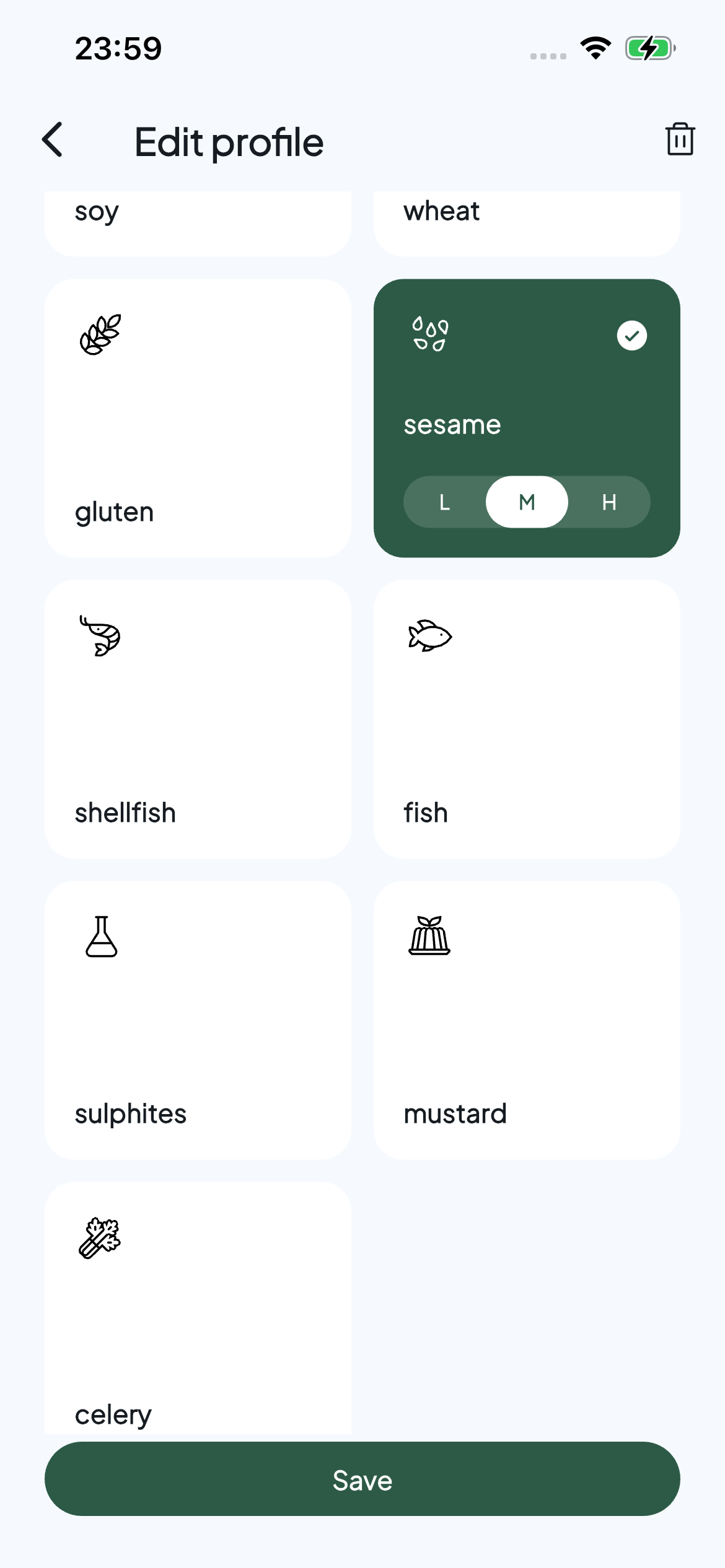
Allervibe scans for sesame seeds, sesame oil, tahini, and gingelly across the ingredient list, including hidden sources in spice mixes and seasonings.
Frequently asked questions
- Is sesame allergy common?
- It affects roughly 0.1–0.2% of people in Europe and the US, and diagnoses have risen sharply over the past two decades as sesame has spread from speciality foods into everyday bread, snacks and sauces.
- Do children outgrow sesame allergy?
- Only some — studies suggest around 20–30%. Most people who develop it in childhood keep it into adulthood, so ask for periodic re-testing rather than testing at home.
- Can adults develop a sesame allergy?
- Yes. New-onset sesame allergy in adults is well documented, often in people who already react to peanuts or tree nuts.
- Can I use sesame oil if I am allergic to sesame?
- No. Toasted and cold-pressed sesame oil contain sesame protein and have caused anaphylaxis. Even refined oil should only be used after discussing it with your allergist.
- Is sesame gluten-free?
- Yes. Sesame is naturally gluten-free. Gluten and sesame are separate allergens with separate labelling — a gluten-free claim tells you nothing about sesame.
- Does sesame have to be declared on restaurant menus?
- In the EU and UK, yes — allergen information for the 14 regulated allergens, sesame included, must be available for unpackaged and restaurant food. In the US, menu labelling is not federally required.
Avoid sesame with Allervibe
Identifying sesame in food products can be challenging and time-consuming. Allervibe makes this process simple and reliable.
- ▮ Instantly scan product barcodes to check for sesame
- ▲ Get immediate alerts for sesame and potential cross-contamination
- ↻ Keep a history of scanned products for future reference