 Allervibe

Sulfite allergy and sensitivity: symptoms, foods high in sulfites and labelling
Sulfites are preservatives, not a protein, so a "sulfite allergy" is really a sensitivity — but for asthmatics it can be dangerous. Symptoms, the full sulfite food list, the E numbers to look for, and how Allervibe flags them.
● Allergen Details
| What is sulphites?
Sulphites are preservatives used to prevent browning, control bacteria, and extend shelf life. By EU law, foods containing more than 10 mg/kg of sulphites must declare them. Common forms include E220–E228.
| Where is sulphites found?
Sulphites are in wine, beer, dried fruit, fruit juices, pickles, sausages, processed shrimp, instant mashed potato, and many condiments and dressings.
| Common symptoms of sulphites allergy
Sulphites do not cause a classic allergy but can trigger severe reactions in sensitive people, especially those with asthma — wheezing, breathing difficulty, hives, and even anaphylaxis-like reactions.
Sulfite allergy or sulfite sensitivity?
Sulfites (sulphites in British spelling) are sulphur-based preservatives: sulphur dioxide and the sodium, potassium and calcium sulfites, bisulfites and metabisulfites — E220 to E228 on European labels. They stop browning, kill microbes and keep wine from oxidising. They are also produced naturally in small amounts by fermentation, which is why even "no added sulfites" wine contains some.
Because sulfites are small molecules rather than proteins, they rarely cause a true IgE allergy. What most people have is a sensitivity: a reaction, most often in the airways, whose mechanism is not fully understood. It affects an estimated 3–10% of people with asthma and is rare in everyone else. Anaphylaxis-like reactions have been reported, which is why sulfites are treated as an allergen in law.
Sulfite allergy symptoms
Reactions typically appear within minutes of eating or drinking:
- Wheezing, chest tightness, coughing, shortness of breath — the dominant symptom in asthmatics, sometimes severe
- Flushing, hives, itching, swelling of the face
- Nasal congestion, sneezing, runny nose
- Stomach pain, nausea, diarrhoea
- Dizziness, a drop in blood pressure, rarely collapse
A "wine headache" or facial flushing after red wine is more often caused by histamine or alcohol than by sulfites; white wine and dried fruit usually contain far more sulfite than red. Diagnosis is by a supervised oral challenge — skin and blood tests are not reliable for sulfites.
Sulfite food list: where sulfites are highest
Sulfite content varies enormously. The foods most likely to trigger reactions are the high-sulfite ones:
- Dried fruit: apricots, golden raisins, sultanas, dried apple, mango, coconut (very high — often 500–2,000 mg/kg); prunes and dark raisins are usually lower
- Wine (especially white and sweet wines), cider, beer, wine vinegar, grape juice
- Prawns, shrimp and lobster (dipped in metabisulfite on the boat), frozen and fresh
- Processed potato: frozen fries, dehydrated mashed potato, pre-peeled potatoes, crisps
- Pickled and preserved vegetables, sauerkraut, glacé cherries, candied fruit, maraschino cherries
- Fruit juices and cordials, lemon and lime juice from concentrate, bottled lemon juice
- Sausages, burgers and minced meat in some countries (permitted in the UK, not for fresh meat in the EU)
- Jams, fruit fillings, molasses, corn syrup, some sugars
- Condiments: mustard, horseradish, chutneys, salad dressings, gelatin
- Some medicines and injectable drugs, including certain adrenaline and local-anaesthetic preparations
Low-sulfite or sulfite-free: fresh fruit and vegetables (except where pre-cut and treated), fresh meat and fish, plain grains, dairy, eggs, and most spirits.
How sulfites are labelled: E220–E228 and the 10 mg rule
In the EU and UK, any food or drink containing more than 10 mg/kg or 10 mg/l of sulphur dioxide must declare it, either in the highlighted ingredients list or, on wine, as "contains sulphites". Below that threshold nothing appears. The E numbers to know are E220 sulphur dioxide, E221 sodium sulfite, E222 sodium bisulfite, E223 sodium metabisulfite, E224 potassium metabisulfite, E226 calcium sulfite, E227 calcium bisulfite and E228 potassium bisulfite. Our [E220 page](/additives/e220-sulphur-dioxide/) has the regulatory detail. The US applies the same 10 ppm rule and has banned sulfites on fresh fruit and vegetables since 1986. Abroad look for Sulfite (German), sulfites (French), sulfitos (Spanish), solfiti (Italian), sulfiet (Dutch), siarczyny (Polish) and sulfiti (Croatian).
| How Allervibe helps you avoid sulphites
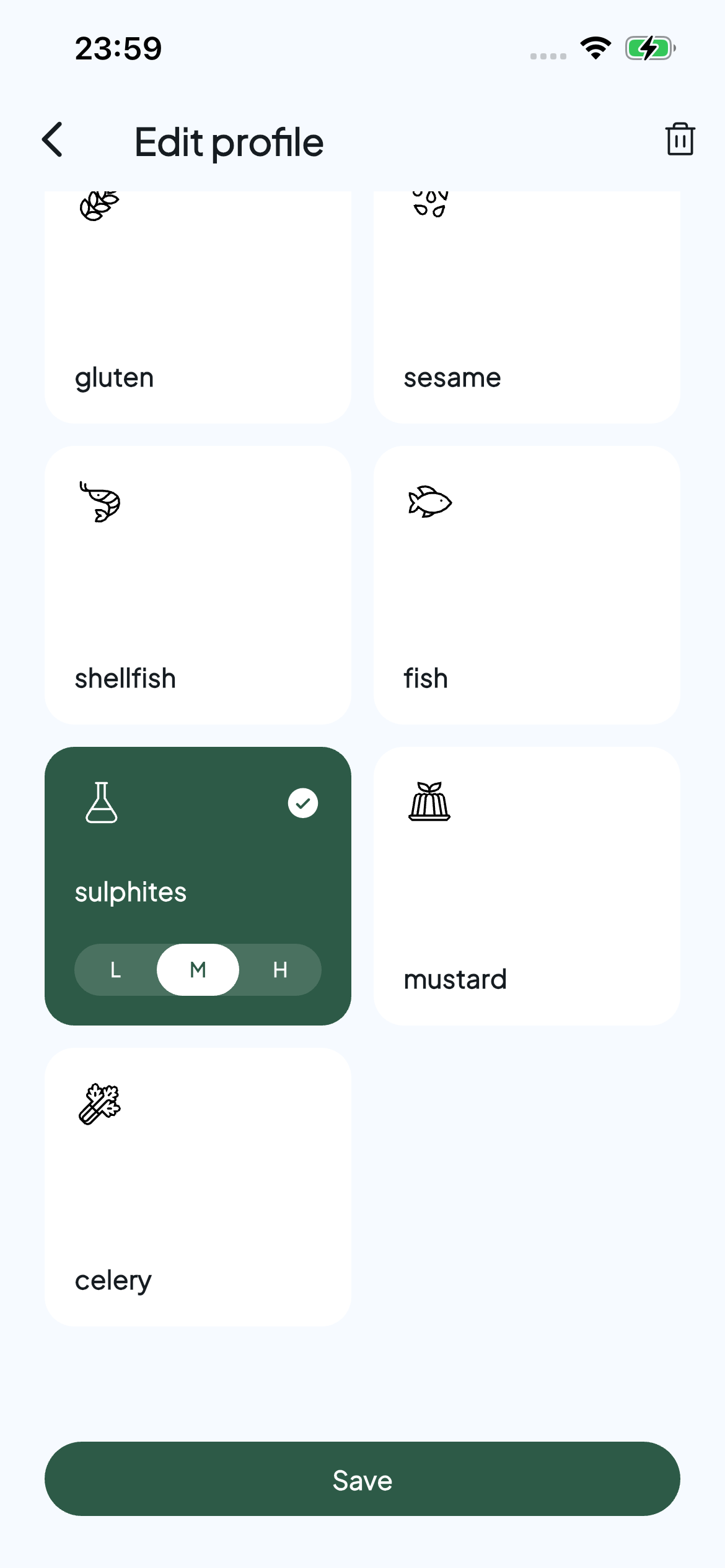
Allervibe lists every E-number on the label, including E220 (sulphur dioxide) through E228 (potassium hydrogen sulphite), so you can spot sulphites at a glance.
Frequently asked questions
- Is there a test for sulfite allergy?
- There is no reliable skin or blood test. Diagnosis is made from history and, if needed, a graded oral challenge with sulfite capsules under medical supervision.
- Do all wines contain sulfites?
- Effectively yes. Fermentation produces sulfites naturally, so even organic and "no added sulfites" wines contain small amounts; they are simply below the labelling threshold or much lower than conventional wine. Sweet white wines usually contain the most.
- Are sulfites the same as sulfa drugs or sulfates?
- No. Sulfa (sulfonamide) antibiotic allergy, sulfate salts like magnesium sulfate, and sulfites are unrelated. Being sensitive to one does not mean sensitivity to the others.
- Can sulfites cause anaphylaxis?
- Rarely, but severe asthma attacks and anaphylaxis-like reactions have been documented, which is why sulfites are a legally declared allergen and why asthmatics with sulfite sensitivity should carry their reliever inhaler.
- Are sulfites in medicines?
- Some are — certain injectable adrenaline, local anaesthetics and eye drops contain metabisulfite as an antioxidant. Tell your doctor and pharmacist about a sulfite sensitivity; the benefit of emergency adrenaline still outweighs the risk.
- Do I need to avoid sulfites completely?
- Most sensitive people react only above a personal threshold, so avoiding the high-sulfite foods (dried fruit, wine, processed potato, prawns) is usually enough. An allergist can help establish your threshold.
Avoid sulphites with Allervibe
Identifying sulphites in food products can be challenging and time-consuming. Allervibe makes this process simple and reliable.
- ▮ Instantly scan product barcodes to check for sulphites
- ▲ Get immediate alerts for sulphites and potential cross-contamination
- ↻ Keep a history of scanned products for future reference