 Allervibe

Celery allergy: symptoms, hidden sources and the pollen link
Yes, you can be allergic to celery — it is common enough in Europe to be one of the 14 regulated allergens. Symptoms, the pollen connection, why cooked celery still counts, and where celery hides in soups, stocks and spice mixes.
● Allergen Details
| What is celery?
Celery is a member of the carrot family. The stalk, root (celeriac), seeds, leaves, and oil are all used in cooking and as flavouring. Celery is one of the 14 mandatory allergens in the EU.
| Where is celery found?
Celery is in obvious places like soups, stocks, and salads, but also hides in stock cubes, sauces, ready meals, sausages, salami, mustard blends, spice mixes, and meat seasonings.
| Common symptoms of celery allergy
Reactions range from mild oral itching to swelling, hives, vomiting, breathing difficulty, and anaphylaxis. Heat does not destroy the allergen, so cooked celery is just as risky as raw.
Is celery an allergen? Can you be allergic to celery?
Yes on both counts. Celery is one of the 14 allergens that EU and UK food law requires to be declared, and in central Europe — Germany, Switzerland, Austria, France — it is among the most frequent causes of food allergy in adults. It is far less recognised in the UK, the US and Australia, where it is not a regulated allergen (the US does not require celery to be labelled at all), which is why many English-speaking allergy sufferers only discover it after a reaction abroad.
The rules cover the whole plant: stalk celery, celeriac (celery root), celery leaves, celery seed and celery oil, and anything made from them, including celery salt and the "vegetable extract" in many stock cubes.
Celery allergy symptoms
There are two patterns, and they behave differently.
Most celery allergy in Europe is **pollen-related**. People sensitised to birch pollen (the "celery–birch–mugwort–spice syndrome") react to proteins in celery that resemble pollen proteins. Typical symptoms are itching, tingling and mild swelling of the lips, mouth and throat within minutes of eating raw celery — the oral allergy syndrome. These proteins are partly destroyed by heat, so some people tolerate cooked celery, though not all.
A smaller group has a **primary celery allergy** to heat-stable proteins, especially the lipid-transfer protein Api g 2 and profilin. This can cause hives, facial swelling, stomach cramps, vomiting, wheeze and full anaphylaxis, from cooked as well as raw celery and celeriac. Severe reactions to celeriac have been reported after exercise (food-dependent exercise-induced anaphylaxis). Because the two forms need very different levels of avoidance, a component-resolved blood test from an allergist is worth having.
Celery allergy foods to avoid
Raw stalks are easy to spot. The allergen is difficult because celery is a base flavour in savoury food across Europe:
- Stock cubes, bouillon powder, gravy granules, soups (fresh, tinned and instant), ready meals
- Celery salt — on Bloody Marys, chips, and in Chicago-style hot dogs
- Spice blends: seasoning salts, curry powder, "Italian herbs", barbecue rubs, Old Bay-style seafood seasoning
- Vegetable juices (V8-type drinks), green juices and smoothies
- Sauces and condiments: ketchup, brown sauce, salad dressings, remoulade, pickle relish
- Mirepoix and soffritto in stews, risottos, sauces and braises; Waldorf salad; coleslaw with celeriac
- Sausages, pâtés, meat pies and cold cuts seasoned with celery seed
- Cross-reactive relatives worth knowing: carrot, parsnip, parsley, coriander, fennel, aniseed, cumin, caraway, dill — all in the same botanical family (Apiaceae) and often co-allergens
In the EU celery must be named even inside "spices" or "vegetable extract", so a compliant label will say so. Outside the EU it can hide inside "natural flavouring" without a trace on the label.
Celery and celeriac: cooked, dried, juiced
Celeriac is the same species as stalk celery and contains the same allergens, often in higher concentration. Cooking reduces the pollen-related proteins but not the heat-stable ones — celeriac remoulade, celery soup and stock made with celery have all caused serious reactions. Dried celery in spice mixes and celery seed are concentrated forms. If you know your allergy is purely pollen-related, your allergist may tell you cooked celery is acceptable; do not assume it.
How celery is labelled
EU and UK labels must highlight celery in the ingredients list, and restaurants and takeaways must be able to say whether a dish contains it — stock is the usual culprit. In Canada and the US celery is not a priority allergen. Abroad look for Sellerie (German), céleri (French), apio (Spanish), sedano (Italian), selderij (Dutch), seler (Polish), aipo (Portuguese) and celer (Croatian). Allervibe recognises each of these, including celery salt and celeriac, so a scan in a foreign supermarket gives the same verdict as at home.
| How Allervibe helps you avoid celery
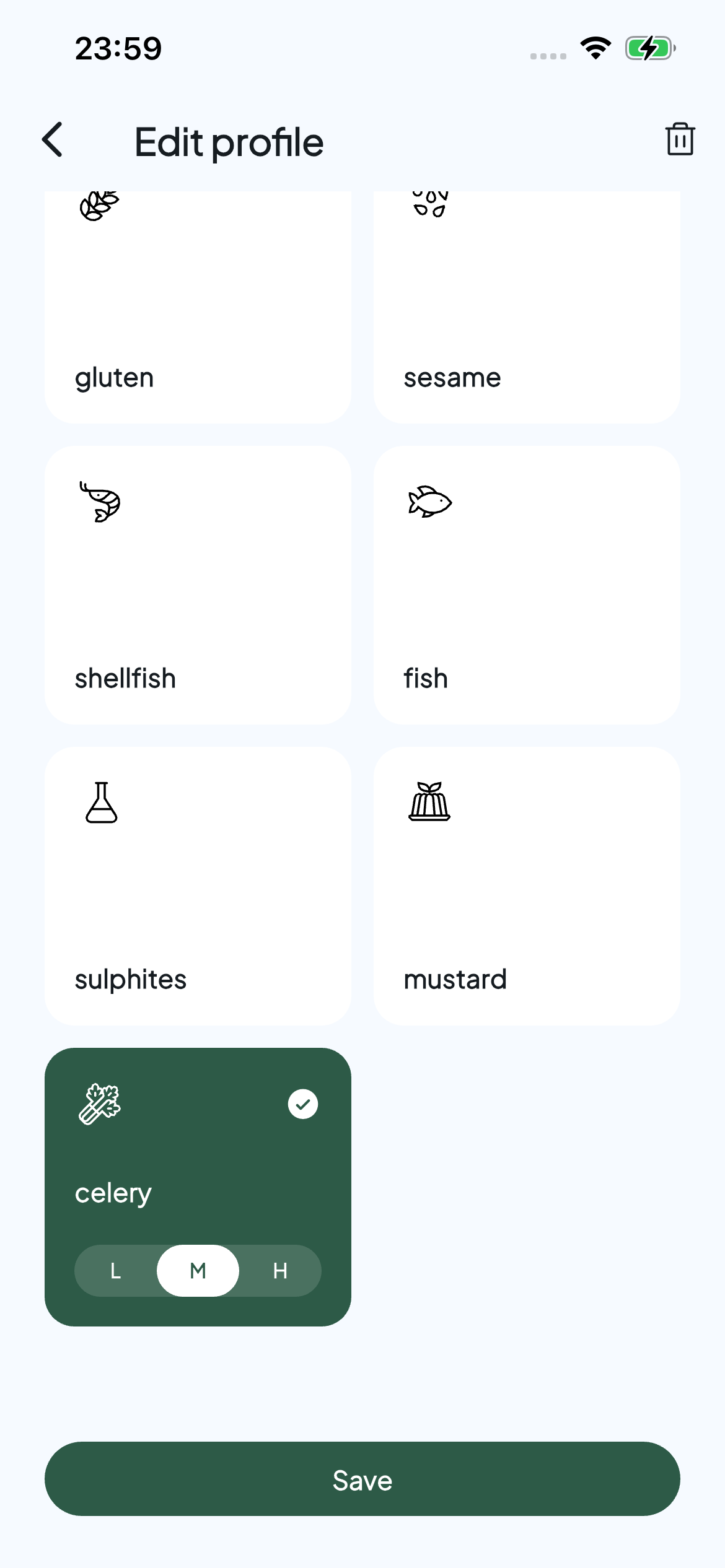
Allervibe scans for celery, celeriac, celery seed, and celery extract — including the hidden uses in stocks, seasonings, and ready meals.
Frequently asked questions
- Can celery allergy be severe?
- Yes. While most reactions are mild mouth symptoms linked to birch pollen, primary celery allergy to heat-stable proteins can cause anaphylaxis, and celeriac in particular has caused severe reactions.
- Is celery salt a problem?
- Yes. Celery salt is ground celery seed mixed with salt and contains the allergen. It is common in seasoning blends, snack foods and cocktail rims.
- Does cooking make celery safe?
- Only for some people. Heat reduces the birch-pollen-related proteins but not the lipid-transfer protein or profilin, so cooked celery, celeriac and celery-based stocks can still trigger reactions.
- Why do I react to carrots and spices too?
- Carrot, parsley, coriander, fennel, cumin and aniseed belong to the same plant family as celery and share allergens. Many people with celery allergy react to several of them, particularly if they also have mugwort or birch pollen allergy.
- Is celery allergy common in children?
- It is mainly an adult allergy that develops after pollen sensitisation; it is uncommon in young children.
- Is celery a regulated allergen in the US?
- No. The US recognises nine major allergens and celery is not among them, so American products may contain celery under "natural flavours" without declaring it. In the EU and UK it must be labelled.
Avoid celery with Allervibe
Identifying celery in food products can be challenging and time-consuming. Allervibe makes this process simple and reliable.
- ▮ Instantly scan product barcodes to check for celery
- ▲ Get immediate alerts for celery and potential cross-contamination
- ↻ Keep a history of scanned products for future reference